Amazing article that first appeared in the Wall Street Journal:
Doctors try new techniques to regrow human tissue
By RON WINSLOW
AP
Eds: Via AP.
By RON WINSLOW
The Wall Street Journal
Five soldiers at a military base in Texas are about to participate in a remarkable test to see if they can regrow portions of fingers they lost in the war in Iraq.
Doctors plan to treat them with a fine powder called extracellular matrix, harvested from pig bladders. The material, found in all animals, is the scaffolding that cells latch onto as they divide and grow into tissue and body parts. In the human body, it was long thought to be inert. But scientists have discovered that it appears to activate latent biological processes that spur healing and regenerate tissue.
Full Article
Friday, February 16, 2007

Wednesday, February 14, 2007
Dirty little secrets in the NYT...
This article, that made the top of the New York Times' most emailed list is so fitting to my life that I was at once amazed and appalled. Well, at least I'm not the only one who is a little bossy in the kitchen
Another interesting article in the Wall Street Journal deals with a new means of predicting outcomes far and wide. The article specifically deals with how Wall Street traders are not only betting on stocks and bonds and such, but events as well. Apparently they are not only doing it, but doing it with startling accuracy (they accurately predicted the election results in all 50 states for the 06 mid-terms). The most interesting of the sites mentioned is called Intrade, which has predictions on everything from political outcomes to the Oscars to the chances that bird flu will be discovered on US soil by March. According to them, Martin Scorsese is a lock for best director this year...we'll see.
On an unrelated note, I finally saw Dave Chapelle's Block Party and let me tell you, if you're a Chapelle fan, it's eminently worth seeing. The man is indisputably a comic genius.
And finally, I had promised a couple friends that I would post some pix of a mosque I saw over in Iraq. This is up in the north very close to Mosul and the actual mosque is one of the most breathtaking things I saw over there. It's well over a thousand years old but there was a strange peace that hung over it like a cloud. You could definitely tell that it was a holy site. As a bonus, I've included a tank graveyard that was close by.
(just click on the pic to view the album)
Another interesting article in the Wall Street Journal deals with a new means of predicting outcomes far and wide. The article specifically deals with how Wall Street traders are not only betting on stocks and bonds and such, but events as well. Apparently they are not only doing it, but doing it with startling accuracy (they accurately predicted the election results in all 50 states for the 06 mid-terms). The most interesting of the sites mentioned is called Intrade, which has predictions on everything from political outcomes to the Oscars to the chances that bird flu will be discovered on US soil by March. According to them, Martin Scorsese is a lock for best director this year...we'll see.
On an unrelated note, I finally saw Dave Chapelle's Block Party and let me tell you, if you're a Chapelle fan, it's eminently worth seeing. The man is indisputably a comic genius.
And finally, I had promised a couple friends that I would post some pix of a mosque I saw over in Iraq. This is up in the north very close to Mosul and the actual mosque is one of the most breathtaking things I saw over there. It's well over a thousand years old but there was a strange peace that hung over it like a cloud. You could definitely tell that it was a holy site. As a bonus, I've included a tank graveyard that was close by.
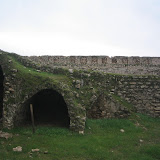
(just click on the pic to view the album)
Friday, February 9, 2007
Random Things That Fascinate Me
There is this site called swivel.com that allows people to submit graphs and charts of random data they've gathered. I'm not sure why but I find this stuff endlessly entertaining.
google maps finally added subway stops...
a new trend in flooring that sounds delightful for a daylight basement.
Richard Branson offers $25 million prize to combat global warming.
on a lighter note I found this old flash movie that I think is funny as hell called ze end of ze world. It takes a long time to load but it never stops making me laugh...
google maps finally added subway stops...
a new trend in flooring that sounds delightful for a daylight basement.
Richard Branson offers $25 million prize to combat global warming.
on a lighter note I found this old flash movie that I think is funny as hell called ze end of ze world. It takes a long time to load but it never stops making me laugh...
Tuesday, January 23, 2007
New York Moments Abound
I went to this phenomenal little tea shop on bleeker and bought a quarter pound of green, chai and chamomile. Then I walked by a street down the street owned by an old italian guy who sells stylish imported jeans to cheap while smoking in the store and closing too early each day. A going out of business sign was in the window and even though it was only six he was already closed. As I peered in the window, two middle aged men ambled by and tried the door. The girl who was closing up shook her head and waved them on but one of them knocked again with a persistence that screams new york. She opened the door and stammered an apology, sorry guys we're closed for the day...C'mon lady, we all wanna buy and the night is young. A wolfish grin played across his face and light snow flakes began to fall all around us. This is what my friend Saridha refers to as a New York moments. One of those times when you just feel a zen-like oneness with the city. Usually they are characterized by things that could only happen in New York. It was just the heady cocktail of arrogant self-centered new yorkers in the village interacting with hoplessly eccentric shopkeepers as snow falls and taxis jockey for position in the background.
Inside, I thumbed through their delightful rack of underpriced denim until Jake called and asked me to meet him in the meatpacking district at the Fatty Crab to meet some old friends and make some new ones. When I arrived, Erica, a wonderful old soul and a fabulous young stage actor, was behind the bar with a warm smile and a hello so comfortable I felt like she grew up next door to me.
"Want to hear a cool story?" I asked her.
"Absolutely."
I launch right in: When I graduated from college, my friend Virgil gave me an old broken pocket watch as a graduation present. He said it was like a metaphor for my life. It had a fine exterior but was tarnished with imperfection and it had been allowed to fall into a state of disrepair. For it to be able to tell time again, the watch would need to be repaired. Further, to keep telling time it would need to be would each and every day. It's a lot like life Teddy, you need to pay constant attention and put time and effort into it each day. If you do that, it will tell perfect time. The watch was old and antique looking. It's metal body was stained with age and the crystal face was so old you could barely see through it. I put it with some of the other trinkets that I've saved over the years and largely forgot about it. I took those trinkets with me to Iraq as reminders of different people and places that have figured prominently in my life and every once and a while, at the end of really hard days, I would take everything out and hold each item in my hand and just remember. Iraq was a dark time in my life and when I came home I was just happy to still be breathing. I put the bag of trinkets at the bottom of a deep box and largely forgot about it. It took me a long time to come to terms with things I saw over there and in some ways I still haven't but about a month ago I was going through my things and came across the bag. Memories flooded back and a weird combination of bile and relief flooded through me. When I got to the watch I decided it was time to get it working so I put it in my pocket and walked to the train to Manhattan. In the city I walked to this old jewish watch repairman. He remarked that it would probably take a bit of work but that it would be a fine watch when he was done with it. I gave him a twenty dollar deposit and left it with him. He called last wednesday to let me know that my watch was ready. That evening, Harvard Business School called to let me know that I'd been accepted into their MBA program for the fall.
After I finish the story I take a long pull from my PBR and Erica walks around the bar and engulfs me in a hug.
"I'm glad you got your watch working again."
Jake materializes behind me and we are all soon laughing and telling boisterous stories. Pretty much everyone at the bar are either friends or friends of friends so the conversation is open to all. Soon we are pulling on gloves and scarves to head back to Hoboken. The snow is swirling around in flurries now and a light breeze tickles my face. Back home at our loft in Hoboken, Jake and I prepare a traditional french meal of potatoe salad, a hearty vegetable soup and a roast chicken with asparagus spears on the side. We drink a b0ttle of chardonnay and talk about stepping up our efforts with Aottilo. It's almost eleven and I should be getting to bed but instead we decide to go back into the city because the Shins are playing a free show at the Virgin store in Union Square. We arrive shortly after midnight to a sea of beautiful young people crowded against the door. Somehow in our tipsy wine enhanced state, the line can't seem to thwart us and the stocky man turning people away from the door has no sway. We slip though and are on a balcony reserved for people who arrived early and bought a CD. The throng of teenage enthusiasts that surround us is young and vibrant and has a rebellious, challenging energy that I can only envy and love. We lean back and enjoy the spectacle and then head back to the Path for home, stopping at a little bistro called the French Roast and have a glass of beer before retiring for the evening.
Inside, I thumbed through their delightful rack of underpriced denim until Jake called and asked me to meet him in the meatpacking district at the Fatty Crab to meet some old friends and make some new ones. When I arrived, Erica, a wonderful old soul and a fabulous young stage actor, was behind the bar with a warm smile and a hello so comfortable I felt like she grew up next door to me.
"Want to hear a cool story?" I asked her.
"Absolutely."
I launch right in: When I graduated from college, my friend Virgil gave me an old broken pocket watch as a graduation present. He said it was like a metaphor for my life. It had a fine exterior but was tarnished with imperfection and it had been allowed to fall into a state of disrepair. For it to be able to tell time again, the watch would need to be repaired. Further, to keep telling time it would need to be would each and every day. It's a lot like life Teddy, you need to pay constant attention and put time and effort into it each day. If you do that, it will tell perfect time. The watch was old and antique looking. It's metal body was stained with age and the crystal face was so old you could barely see through it. I put it with some of the other trinkets that I've saved over the years and largely forgot about it. I took those trinkets with me to Iraq as reminders of different people and places that have figured prominently in my life and every once and a while, at the end of really hard days, I would take everything out and hold each item in my hand and just remember. Iraq was a dark time in my life and when I came home I was just happy to still be breathing. I put the bag of trinkets at the bottom of a deep box and largely forgot about it. It took me a long time to come to terms with things I saw over there and in some ways I still haven't but about a month ago I was going through my things and came across the bag. Memories flooded back and a weird combination of bile and relief flooded through me. When I got to the watch I decided it was time to get it working so I put it in my pocket and walked to the train to Manhattan. In the city I walked to this old jewish watch repairman. He remarked that it would probably take a bit of work but that it would be a fine watch when he was done with it. I gave him a twenty dollar deposit and left it with him. He called last wednesday to let me know that my watch was ready. That evening, Harvard Business School called to let me know that I'd been accepted into their MBA program for the fall.
After I finish the story I take a long pull from my PBR and Erica walks around the bar and engulfs me in a hug.
"I'm glad you got your watch working again."
Jake materializes behind me and we are all soon laughing and telling boisterous stories. Pretty much everyone at the bar are either friends or friends of friends so the conversation is open to all. Soon we are pulling on gloves and scarves to head back to Hoboken. The snow is swirling around in flurries now and a light breeze tickles my face. Back home at our loft in Hoboken, Jake and I prepare a traditional french meal of potatoe salad, a hearty vegetable soup and a roast chicken with asparagus spears on the side. We drink a b0ttle of chardonnay and talk about stepping up our efforts with Aottilo. It's almost eleven and I should be getting to bed but instead we decide to go back into the city because the Shins are playing a free show at the Virgin store in Union Square. We arrive shortly after midnight to a sea of beautiful young people crowded against the door. Somehow in our tipsy wine enhanced state, the line can't seem to thwart us and the stocky man turning people away from the door has no sway. We slip though and are on a balcony reserved for people who arrived early and bought a CD. The throng of teenage enthusiasts that surround us is young and vibrant and has a rebellious, challenging energy that I can only envy and love. We lean back and enjoy the spectacle and then head back to the Path for home, stopping at a little bistro called the French Roast and have a glass of beer before retiring for the evening.
Saturday, January 20, 2007
Tom Friedman's latest
here is the text from friedman's latest op-ed(I love this guy)
A Warning From the Garden
E-Mail
Print
Save
By THOMAS L. FRIEDMAN
Published: January 19, 2007
Well, so much for our daffodils! They all bloomed in our front yard last week. They now form a nice bright yellow cluster at the bottom of our driveway. Temperatures of 65 degrees in Washington in January will do that. Frankly, daffodils in January do brighten up the lawn. Maybe next year we’ll try for roses in February.
Skip to next paragraph
Fred R. Conrad/The New York Times
Thomas Friedman.
Related
Q. & A. With Thomas L. Friedman
The columnist answered readers' questions. Columnist Page »
Podcasts
Audio Versions of Op-Ed Columns
TimesSelect subscribers can listen to a reading of the day's Op-Ed columns.
Don’t know about you, but when I see things in nature that I’ve never seen in my life, like daffodils blooming in January, it starts to feel creepy, like a “Twilight Zone” segment. I half expect to wake one day and find Rod Serling mowing my lawn — in shorts.
Why not? Last December was the fourth warmest on record, and 2006 was the hottest year in America since 1895. It was declared the hottest in Britain since 1659.
Even the White House seems to have noticed. Al Hubbard, the president’s economic adviser, says Mr. Bush will soon unveil an energy independence strategy that will produce “headlines above the fold that will knock your socks off.” Since everything the president has done on energy up to now has left my socks firmly in place, I will be eager to hear what Mr. Bush says.
Neither the White House nor the Democratic Party seems to grasp that the public and business community are miles ahead of them on this energy/environment issue. The presidential candidate who finally figures that out, though — and comes up with a compelling energy/environment agenda — is going to have a real leg up in 2008.
What would be compelling? I used to think it would be a “Manhattan Project” on energy. I don’t any longer. I’ve learned that there is no magic bullet for reducing our dependence on oil and emissions of greenhouse gases — and politicians who call for one are usually just trying to avoid asking for sacrifice today.
The right rallying call is for a “Green New Deal.” The New Deal was not built on a magic bullet, but on a broad range of programs and industrial projects to revitalize America. Ditto for an energy New Deal. If we are to turn the tide on climate change and end our oil addiction, we need more of everything: solar, wind, hydro, ethanol, biodiesel, clean coal and nuclear power — and conservation.
It takes a Green New Deal because to nurture all of these technologies to a point that they really scale would be a huge industrial project. If you have put a windmill in your yard or some solar panels on your roof, bless your heart. But we will only green the world when we change the very nature of the electricity grid — moving it away from dirty coal or oil to clean coal and renewables. And that is a huge industrial project — much bigger than anyone has told you. Finally, like the New Deal, if we undertake the green version, it has the potential to create a whole new clean power industry to spur our economy into the 21st century.
To spark a Green New Deal today requires getting two things right: government regulations and prices. Look at California. By setting steadily higher standards for the energy efficiency of buildings and appliances — and creating incentives for utilities to work with consumers to use less power — California has held its per-capita electricity use constant for 30 years, while the rest of the nation has seen per- capita electricity use increase by nearly 50 percent, according to the Natural Resources Defense Council. That has saved California from building 24 giant power plants.
Had Ronald Reagan not rolled back the higher fuel efficiency standards imposed on Detroit, we might need no Middle East oil today. High standards force innovation, and innovation leads to conservation at scale.
But prices also matter. I don’t care whether it is a federal gasoline tax, carbon tax, B.T.U. tax or cap-and-trade system, power utilities, factories and car owners have to be required to pay the real and full cost to society of the carbon they put into the atmosphere. And higher costs for fossil fuels make more costly clean alternatives more competitive.
“The regulated utilities are the most important consumers from the perspective of long-term investment, and if they are not required to value carbon reduction then they will under-invest in energy efficiency and renewable energy,” Peter Darbee, chairman of Pacific Gas and Electric, said to me.
This isn’t rocket science. Government standards matter. They drive innovation and efficiency. And prices matter. They drive more and cleaner energy choices. So when the president unveils his energy proposals, if they don’t call for higher efficiency standards and higher prices for fossil fuels — take your socks off yourself. It’s going to get hot around here.
A Warning From the Garden
Save
By THOMAS L. FRIEDMAN
Published: January 19, 2007
Well, so much for our daffodils! They all bloomed in our front yard last week. They now form a nice bright yellow cluster at the bottom of our driveway. Temperatures of 65 degrees in Washington in January will do that. Frankly, daffodils in January do brighten up the lawn. Maybe next year we’ll try for roses in February.
Skip to next paragraph
Fred R. Conrad/The New York Times
Thomas Friedman.
Related
Q. & A. With Thomas L. Friedman
The columnist answered readers' questions. Columnist Page »
Podcasts
Audio Versions of Op-Ed Columns
TimesSelect subscribers can listen to a reading of the day's Op-Ed columns.
Don’t know about you, but when I see things in nature that I’ve never seen in my life, like daffodils blooming in January, it starts to feel creepy, like a “Twilight Zone” segment. I half expect to wake one day and find Rod Serling mowing my lawn — in shorts.
Why not? Last December was the fourth warmest on record, and 2006 was the hottest year in America since 1895. It was declared the hottest in Britain since 1659.
Even the White House seems to have noticed. Al Hubbard, the president’s economic adviser, says Mr. Bush will soon unveil an energy independence strategy that will produce “headlines above the fold that will knock your socks off.” Since everything the president has done on energy up to now has left my socks firmly in place, I will be eager to hear what Mr. Bush says.
Neither the White House nor the Democratic Party seems to grasp that the public and business community are miles ahead of them on this energy/environment issue. The presidential candidate who finally figures that out, though — and comes up with a compelling energy/environment agenda — is going to have a real leg up in 2008.
What would be compelling? I used to think it would be a “Manhattan Project” on energy. I don’t any longer. I’ve learned that there is no magic bullet for reducing our dependence on oil and emissions of greenhouse gases — and politicians who call for one are usually just trying to avoid asking for sacrifice today.
The right rallying call is for a “Green New Deal.” The New Deal was not built on a magic bullet, but on a broad range of programs and industrial projects to revitalize America. Ditto for an energy New Deal. If we are to turn the tide on climate change and end our oil addiction, we need more of everything: solar, wind, hydro, ethanol, biodiesel, clean coal and nuclear power — and conservation.
It takes a Green New Deal because to nurture all of these technologies to a point that they really scale would be a huge industrial project. If you have put a windmill in your yard or some solar panels on your roof, bless your heart. But we will only green the world when we change the very nature of the electricity grid — moving it away from dirty coal or oil to clean coal and renewables. And that is a huge industrial project — much bigger than anyone has told you. Finally, like the New Deal, if we undertake the green version, it has the potential to create a whole new clean power industry to spur our economy into the 21st century.
To spark a Green New Deal today requires getting two things right: government regulations and prices. Look at California. By setting steadily higher standards for the energy efficiency of buildings and appliances — and creating incentives for utilities to work with consumers to use less power — California has held its per-capita electricity use constant for 30 years, while the rest of the nation has seen per- capita electricity use increase by nearly 50 percent, according to the Natural Resources Defense Council. That has saved California from building 24 giant power plants.
Had Ronald Reagan not rolled back the higher fuel efficiency standards imposed on Detroit, we might need no Middle East oil today. High standards force innovation, and innovation leads to conservation at scale.
But prices also matter. I don’t care whether it is a federal gasoline tax, carbon tax, B.T.U. tax or cap-and-trade system, power utilities, factories and car owners have to be required to pay the real and full cost to society of the carbon they put into the atmosphere. And higher costs for fossil fuels make more costly clean alternatives more competitive.
“The regulated utilities are the most important consumers from the perspective of long-term investment, and if they are not required to value carbon reduction then they will under-invest in energy efficiency and renewable energy,” Peter Darbee, chairman of Pacific Gas and Electric, said to me.
This isn’t rocket science. Government standards matter. They drive innovation and efficiency. And prices matter. They drive more and cleaner energy choices. So when the president unveils his energy proposals, if they don’t call for higher efficiency standards and higher prices for fossil fuels — take your socks off yourself. It’s going to get hot around here.
Friday, January 19, 2007
The way we spend our money
I was talking to my brother last night about how the united states spends its money and he mentioned how it was difficult for him to conceptualize how the budget is spent. It reminded me of an old graphic created by deviant art called Death and Taxes.

To see the full sized image, click here.
It's funny because this is from 2004 and the budget has increased substantially to well over a trillion since then.
Another thing we were talking about was the ridiculous stance our government has taken on energy. From a financial perspective alone it seems crazy to take the short term benefits of patroleum over the long terms savings of energy independence. And this is not even taking into account the financial repercussions we will face once climate change becomes a bit more pronounced. The conclusion we came to is the same old thing with every "crisis situation" in the world. We seem to be a reactionary culture that is incapable of proactively solving problems.
Amory Lovins of the Rocky Mountain Institute gave a really interesting interview on the Charlie Rose show where he talks about some of the technologies and strategies we should probably be adopting sooner than later.
On an unrelated aside, I posted some of the pictures from my recent african safari on the web via Google's free program Picasa and it was both easy and quick. For PC users looking for a great free program to do basic things with digital photographs I give my highest reccomendation.
To see the full sized image, click here.
It's funny because this is from 2004 and the budget has increased substantially to well over a trillion since then.
Another thing we were talking about was the ridiculous stance our government has taken on energy. From a financial perspective alone it seems crazy to take the short term benefits of patroleum over the long terms savings of energy independence. And this is not even taking into account the financial repercussions we will face once climate change becomes a bit more pronounced. The conclusion we came to is the same old thing with every "crisis situation" in the world. We seem to be a reactionary culture that is incapable of proactively solving problems.
Amory Lovins of the Rocky Mountain Institute gave a really interesting interview on the Charlie Rose show where he talks about some of the technologies and strategies we should probably be adopting sooner than later.
On an unrelated aside, I posted some of the pictures from my recent african safari on the web via Google's free program Picasa and it was both easy and quick. For PC users looking for a great free program to do basic things with digital photographs I give my highest reccomendation.
Subscribe to:
Posts (Atom)